
Grey seals (Halichoerus grypus) are one of two seal species regularly found along the Norfolk coast, alongside common seals. They are the larger of the two species and are easily recognised by their larger size, long muzzle and distinctive nostrils.
Blakeney Point is home to England’s largest grey seal colony, with thousands of grey seal pups born here each year. The seals use the beaches, sandbanks and surrounding coastal waters for breeding, resting, moulting and feeding.
Grey seals are particularly associated with Blakeney Point during the pupping season, when the colony becomes an important breeding site. The first grey seal pup was recorded at Blakeney Point in 1988, and the colony has grown significantly since then.
Also known as | Atlantic grey seal |
Adult length | Males up to 2.5–3 metres; females up to 2 metres |
Adult weight | Males up to 300 kg; females up to 200 kg |
Lifespan | Around 25–35 years |
Colour | Grey, silver, brown or almost black |
Coat pattern | Distinctive dark spots and mottled markings |
Muzzle | Long and broad, particularly in males |
Nostrils | Large and widely spaced |
Diet | Mainly fish, squid and other marine prey |
Habitat | Coastal waters, beaches, sandbanks, islands and rocky shores |
Pupping season at Blakeney Point | Late October to January |
Typical litter size | One pup |
Typical litter size | Around 9,000 each year |
First recorded pup at Blakeney Point | 1988 |
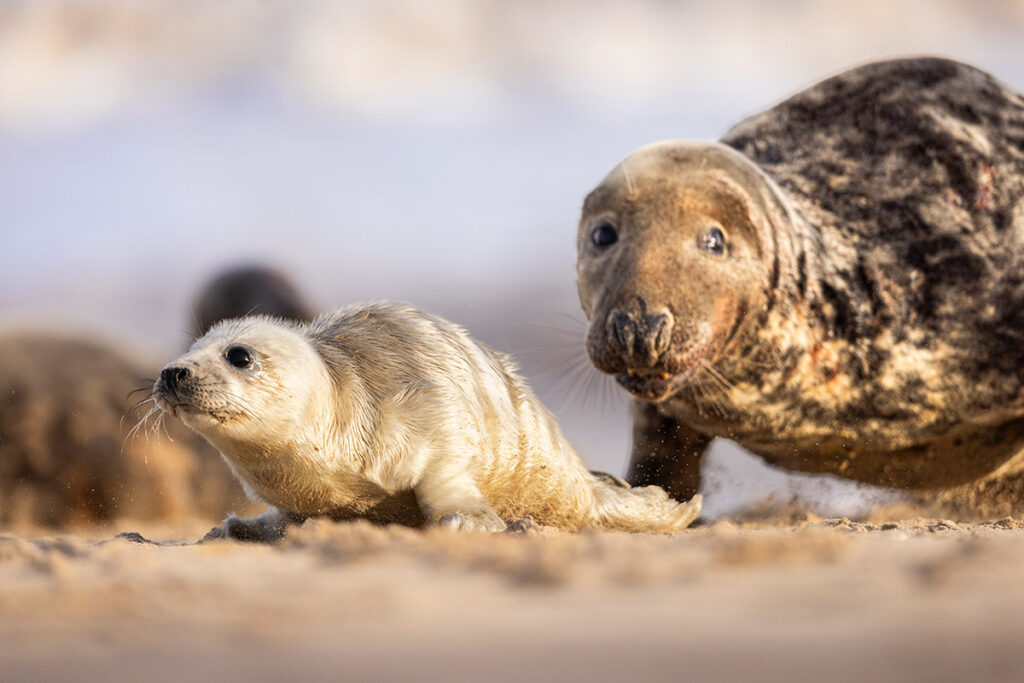
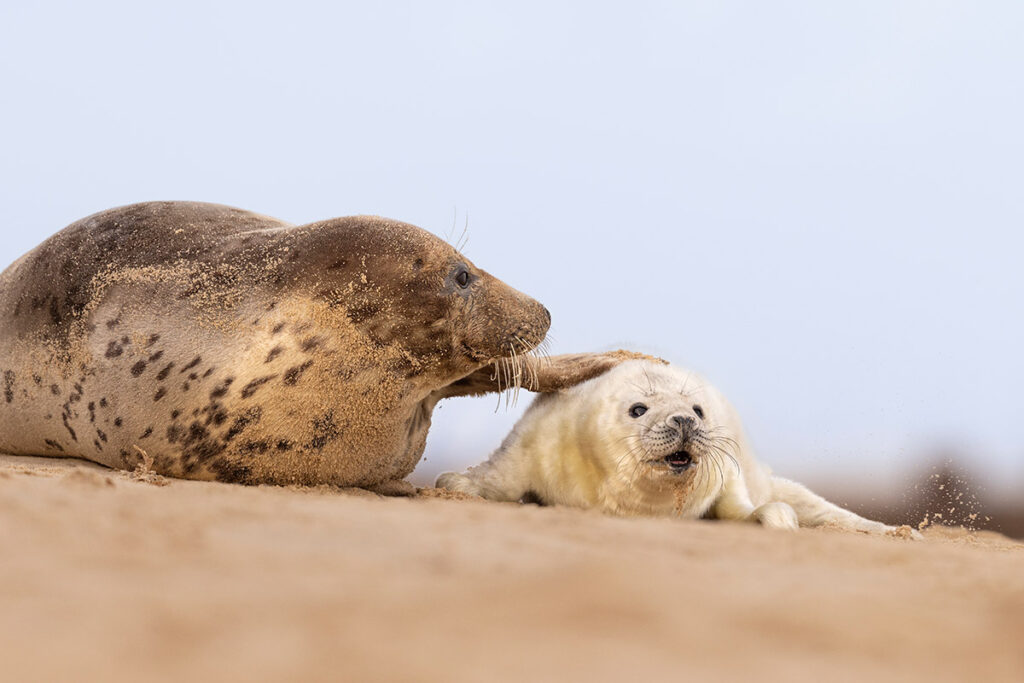
Grey seals can be distinguished from common seals by several physical characteristics:
Although their colouring can vary considerably, grey seals often have a mottled appearance with darker spots and patches. Individual seals can look quite different from one another.
Grey seal pups are born at Blakeney Point during the autumn and winter breeding season. Unlike common seal pups, grey seal pups are not born ready to swim.
Pupping season | Mainly June–July in Norfolk |
Typical litter size | One pup |
Birth weight | Around 13–14 kg |
Newborn coat | Soft, pale yellowish-white fur |
Nursing period | Around 3 weeks |
Swimming | Pups enter the water after they have been weaned and moulted their first coat |
Newborn grey seal pups are covered in a distinctive pale coat, sometimes described as yellowish-white. Their mothers feed them exceptionally rich milk, allowing pups to gain weight rapidly during their short nursing period.
Grey seals spend time both in the water and on land. They regularly haul out, leaving the sea to rest on beaches, sandbanks and other suitable areas.
At Blakeney Point, hauling out is particularly important during the breeding season. Females come ashore to give birth and nurse their pups, while males establish territories and compete for access to females.
Outside the breeding season, grey seals may haul out to rest, moult and recover between feeding trips.
In the water, grey seals are capable divers and spend much of their time hunting for prey. Their streamlined bodies, powerful flippers and ability to conserve oxygen allow them to remain underwater while searching for food.
Grey seals are the largest seal species regularly found around the Norfolk coast. Adult males can reach around 2.5–3 metres in length and weigh up to approximately 300 kg. Females are smaller, reaching around 2 metres and up to approximately 200kg.
The scientific name of the grey seal is Halichoerus grypus.
Grey seals are sometimes referred to as Atlantic grey seals.
Grey seals mainly eat fish, although their diet can also include squid, octopus and other marine prey.
Grey seal pups are born at Blakeney Point mainly between late October and January, with the peak of the pupping season occurring during the autumn and early winter.
Grey seals normally give birth to one pup at a time.
Newborn grey seal pups cannot swim straight away. They remain on land while their mothers nurse them. Once they have been weaned and shed their first coat, they begin entering the water and learning to swim and feed independently.
Grey seals can live for around 25–35 years, although lifespan varies between individuals and between males and females.
Grey seals are generally larger and have a longer, broader muzzle with larger, more widely spaced nostrils. Common seals have a smaller, more rounded head and a shorter muzzle. Grey seals also tend to have a more elongated facial profile.
Yes. Grey seals can be found around Blakeney Point throughout the year, although their numbers and behaviour change with the seasons. The area is particularly important during the autumn and winter pupping season.