
Blakeney Point is one of the most important places in England for seeing seals in their natural coastal environment. The Point is particularly famous for its Grey Seal colony, which has grown dramatically since the first Grey Seal pup was recorded here in 1988. Blakeney Point is now home to England’s largest Grey Seal colony, with around 9,000 Grey Seal pups born each year during the breeding season.
Common Seals can also be seen around Blakeney Point, meaning that the area provides an opportunity to encounter both of Britain’s native seal species.
Bishop’s Boats’ seal trips provide the opportunity to travel out towards Blakeney Point and observe the seals from on of our boats without needing to enter the sensitive areas where the animals breed and rest.
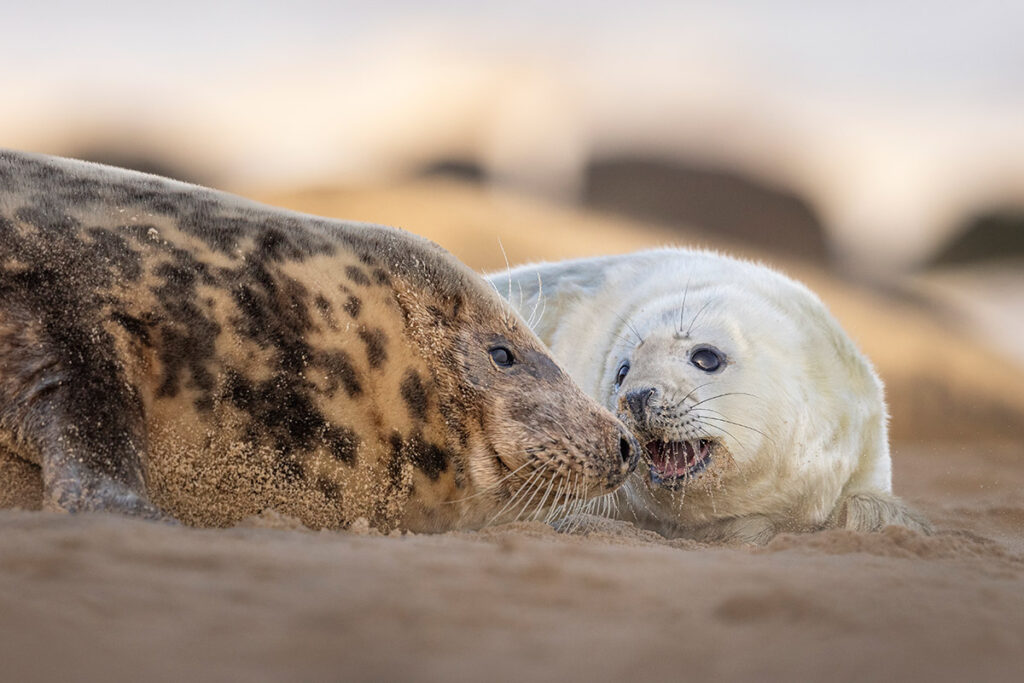
Two species of seal can be encountered around Blakeney Point: the Common Seal and the Grey Seal.
The Grey Seal is the species for which Blakeney Point is particularly renowned because of its internationally important breeding colony.
Common Seals are also found around the Point and surrounding waters, although their breeding presence here is much smaller than that of Grey Seals.
The two species can be distinguished by their appearance, size, head shape, behaviour and breeding characteristics.
For detailed information about each species, explore our dedicated guides:
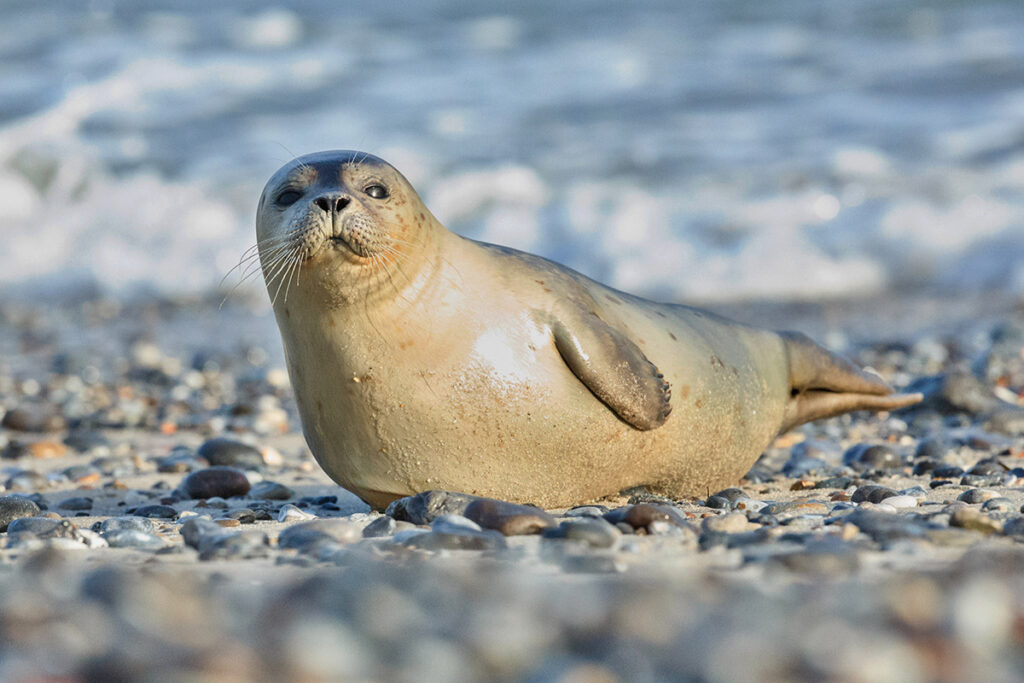
Discover how to identify Common Seals, where they live, what they eat, how they behave and how they reproduce.

Learn more about the Grey Seals that make Blakeney Point home, including their appearance, behaviour, breeding cycle and the remarkable growth of the colony.
The seal colony is part of the wider wildlife of Blakeney National Nature Reserve, the point stretches out into the North Sea as a long shingle and sand spit, backed by dunes, saltmarsh and mudflats. Its remote position and extensive areas of undisturbed coastline make it particularly suitable for seals.
The Grey Seal colony is especially significant. Grey Seals began appearing at Blakeney Point in increasing numbers during the late twentieth century, with the first recorded pup in 1988. Only five pups were recorded in 1999, but numbers subsequently increased substantially. By 2014, Blakeney Point had become England’s largest Grey Seal colony.
Blakeney Point provides several characteristics that make it particularly valuable to seals.
The coastline includes sandy beaches, shingle banks, dunes and shallow coastal waters, creating different habitats within a relatively small area. The Point is also remote, with large areas where seals can rest and breed with comparatively little human disturbance.
For Grey Seals in particular, the shallow, gently sloping beaches provide suitable conditions for the breeding season. The absence of natural predators such as Orcas in the area, the availability of space and access to food-rich waters in the North Sea are also considered important factors in the colony’s growth.
This combination of habitat and relative isolation has helped Blakeney Point become one of the most important seal sites in the country.
The tide plays an important role in the wildlife experience at Blakeney Point.
Seals regularly come ashore to rest, and their preferred haul-out locations can change with the tide. Sandbanks and sections of beach that are exposed at lower water levels can provide important resting areas.
This means that seal locations are not fixed.
Boat trips therefore operate around the local tidal conditions, and departure times can vary depending on the tide and the conditions required for the trip. The changing water level also forms part of the experience. Blakeney Point is a dynamic coastal landscape with creeks appearing and disappearing as the tide moves in and out.
Rather than thinking of the tide simply as determining whether seals are present, it is better to understand it as one of the natural factors influencing where the seals choose to rest and how the boat can navigate the Point.
One of the most fascinating aspects of watching seals is seeing natural behaviour rather than animals in captivity.
A seal hauled out on the beach may appear to be doing very little, but resting on land is an important part of its natural routine.
You may see seals:
Resting together on the sand
Swimming close to the shore
Entering or leaving the water
Moving between haul-out areas
Interacting with other seals
Watching approaching boats or other activity
Mothers caring for pups during the breeding season
Their behaviour can change quickly. A group that has been resting quietly may suddenly enter the water, while seals swimming offshore may haul out on a sandbank later in the trip.
The best approach is to observe rather than try to encourage a reaction.
A seal looking towards a boat does not necessarily mean that it is distressed, but sudden movements, excessive noise or attempts to get closer can cause unnecessary disturbance.