
Blakeney Point provides important feeding and resting habitat for a wide variety of wading birds. The extensive mudflats, saltmarsh, shingle and sandy shoreline create a range of coastal habitats where birds can feed throughout the year.
The changing tide is particularly important. As the sea retreats, large areas of mud and sand are exposed, allowing wading birds to search for worms, shellfish and other small marine animals. When the tide returns, birds move to higher ground, saltmarsh, sandbanks and other suitable resting areas.
Species associated with the wider Blakeney Point area include Oystercatchers, Avocets, Redshanks, Curlews, Turnstones and Ringed Plovers, along with a variety of other resident, breeding and migratory waders.
Bishop’s Boats’ seal trips provide an opportunity to see the coastal habitats used by these birds from the water, alongside the seals and other wildlife of Blakeney Point.

A variety of wading birds can be associated with Blakeney Point and the surrounding North Norfolk coast.
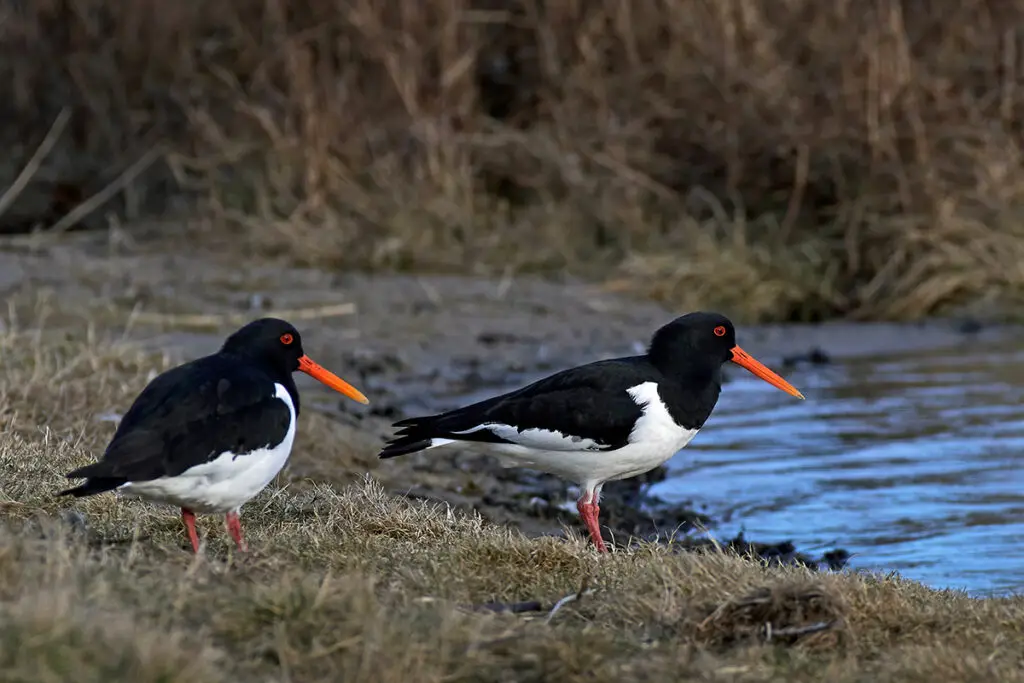
Oystercatchers are one of the most recognisable waders on the Norfolk coast.
They have striking black-and-white plumage and a long, bright orange-red bill. They use this powerful bill to feed on shellfish and other coastal prey.
Oystercatchers can be seen around the shoreline, mudflats and sandbanks of Blakeney Point.

Avocets are particularly distinctive because of their upturned bills, long legs and black-and-white plumage.
They often feed in shallow water or wet mud, sweeping their bills from side to side to locate small prey.
Their elegant appearance makes them one of the most easily recognised wading birds in the area.

Redshanks are medium-sized waders with long orange-red legs and a similarly coloured bill.
They can be found feeding around muddy creeks and saltmarsh, probing the soft ground for small invertebrates.
Their distinctive calls can also make them noticeable before they are seen.

The Curlew is Britain’s largest wading bird and is easily identified by its long, strongly curved bill.
Curlews use their bills to probe soft mud for worms and other prey.
They can be seen feeding across mudflats or resting around the Point, particularly outside the main breeding season.
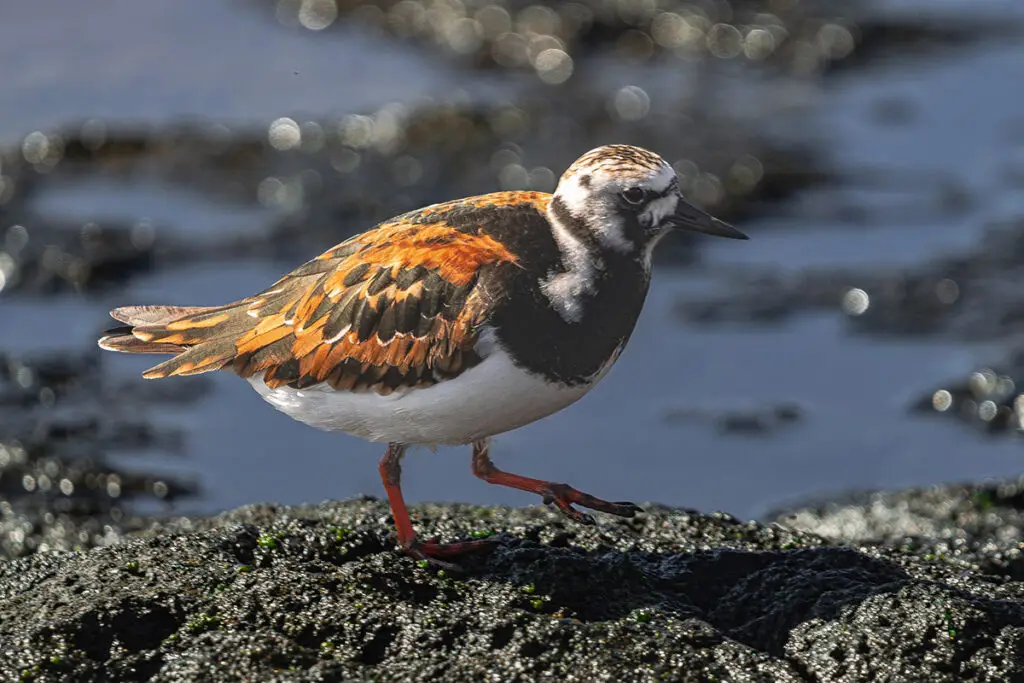
Turnstones are smaller, stockier waders that are particularly associated with rocky shores, shingle and other coastal habitats.
They have a characteristic habit of turning over small stones, seaweed and other material to uncover food beneath.
At Blakeney Point, their feeding behaviour can be particularly interesting to watch around the shoreline.

Ringed Plovers are small waders associated with sandy and shingle coastal habitats.
They feed along the shoreline, running short distances before stopping to pick small prey from the surface.
The open beaches and shingle of Blakeney Point provide suitable habitat for these small coastal birds.
Wading birds use a variety of feeding techniques.
Some species probe into soft mud with their bills, searching for prey beneath the surface. Others pick food from the surface or search amongst stones, shingle and vegetation.
You may see birds:
Watching wading birds can therefore reveal how closely their behaviour is connected to the movement of the sea.
Wading birds can be seen at Blakeney Point throughout the year.
However, the species and numbers present change considerably between seasons.
Spring brings increasing activity as resident birds begin their breeding season and migrant birds return to the coast.
Some species establish territories around the Point and surrounding saltmarshes, while others continue to use the mudflats as feeding areas.
During summer, breeding birds are active around the coastal habitats of the Point.
The mudflats continue to provide important feeding areas, while some waders are raising young in suitable nesting habitats.
Autumn migration can bring an increase in the number and variety of wading birds using the North Norfolk coast.
Birds travelling south may stop at Blakeney Point to feed and build up energy reserves before continuing their migration.
Winter is an important period for coastal waders.
Birds that have travelled south from northern breeding grounds can spend the colder months around the Norfolk coast, feeding on the exposed mudflats and resting on sheltered areas of the Point.
The winter landscape can therefore be particularly rewarding for anyone interested in wading birds.
We use cookies to personalise content, provide social media features, and analyse our traffic. We also share information about your use of our site with our analytics partners. You can change your preferences at any time.

