
The shingle of Blakeney Point is one of the most distinctive features of the North Norfolk coast.
Made up largely of rounded flint pebbles deposited and moved by coastal processes, the shingle forms ridges and recurves that extend along the Point. Some areas remain almost completely bare because the stones are still being moved by waves and storms. In more stable areas, however, plants are able to establish themselves.
This creates vegetated shingle — a specialised coastal habitat where plants grow amongst stones, often in sparse communities with large areas of bare shingle between them.
Blakeney Point supports an important sequence of shingle vegetation, ranging from open pioneer communities on exposed ridges to more continuous vegetation on older and more sheltered areas.
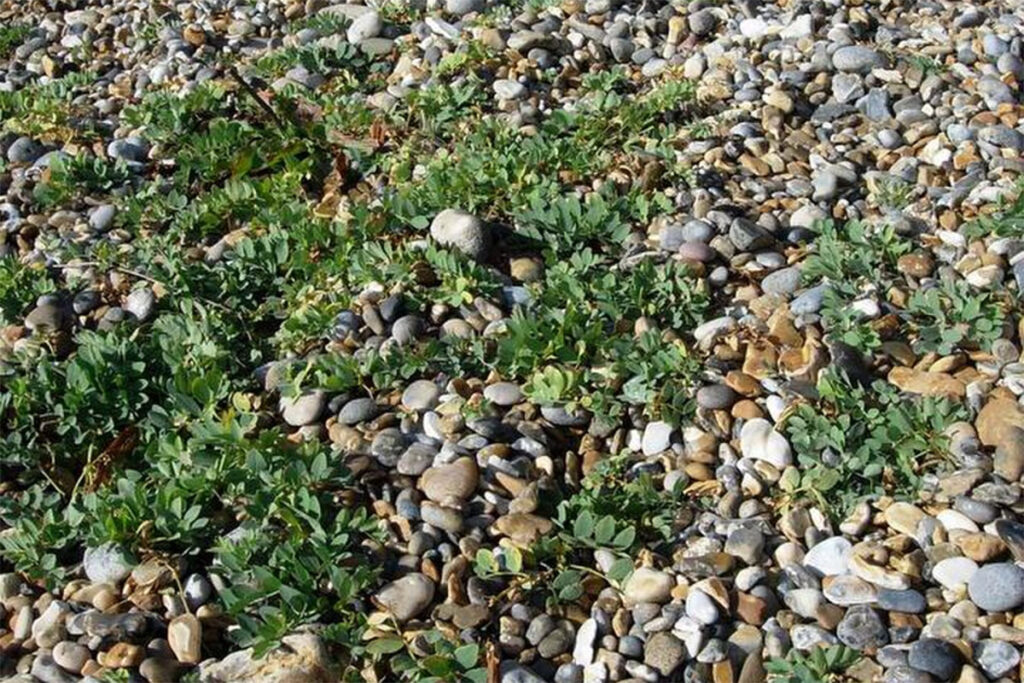
Vegetated shingle is a coastal habitat where plants have established on relatively stable deposits of pebbles and stones.
It is very different from ordinary grassland.
Shingle is:
These conditions mean that only specially adapted plants can establish successfully.
The vegetation is often naturally sparse, with individual plants growing between stones rather than forming a continuous carpet.
Different plants use different strategies to survive.
Plants such as sea kale can develop substantial roots that anchor them into the substrate.
Some coastal plants have thick or fleshy leaves that help them retain water.
Plants such as thrift can grow close to the ground, reducing exposure to strong winds.
Some species are able to tolerate being partly buried or disturbed by moving material.
Many shingle plants can withstand salt spray that would damage less specialised plants.
The appearance of the shingle changes throughout the year.
Plants begin their main period of growth and early coastal flowers start to appear.
This is generally the most colourful period, with flowering plants such as yellow horned-poppy, sea kale, sea pea and sea campion adding colour to the shingle.
Plants begin producing seed and vegetation gradually changes as the growing season ends.
The vegetation becomes less prominent, while strong winds, high tides and storms can reshape the shingle.
Winter storms can also create new areas of bare ground where pioneer plants may establish in future seasons.
A boat trip provides a particularly good perspective on the scale of the shingle spit.
From the water, you can see how the exposed shingle ridges differ from the more vegetated and sheltered areas further inland, as well as how the shingle connects with the saltmarsh and dunes.
The appearance of the Point changes with the seasons, weather and tides, making every visit slightly different.