Plants of Blakeney Point

Blakeney Point is home to a distinctive collection of coastal plants adapted to life in an exposed and constantly changing environment.

The plants found here have to cope with conditions that would be difficult for most species to tolerate. Salt spray, strong winds, shifting shingle, sandy soils, tidal flooding, waterlogged ground and low nutrient levels all influence which plants can survive.

Different plants are therefore associated with different parts of the Point.

On the shingle ridges, you can find hardy plants such as sea campion, yellow horned-poppy and sea kale. Further inland and in more sheltered areas, vegetation becomes more established. On the saltmarsh, specialised salt-tolerant plants such as glasswort, sea purslane and shrubby sea-blite dominate different zones.

Together, these plants form an important part of the diverse habitats that make Blakeney Point such a special place.

Plants adapted to the coast

Coastal plants have developed a range of adaptations to survive in challenging conditions.

At Blakeney Point, plants may need to tolerate:

  • Salt spray
  • Seawater
  • Strong winds
  • Dry, rapidly draining shingle
  • Waterlogged soils
  • Low nutrient levels
  • Moving sand and shingle
  • Regular tidal flooding


Some plants have fleshy leaves or stems that help them deal with salty conditions. Others have deep or extensive root systems that help anchor them in loose ground.

The result is a highly specialised flora that changes noticeably as you move from the beach and shingle towards the saltmarsh and more sheltered areas.

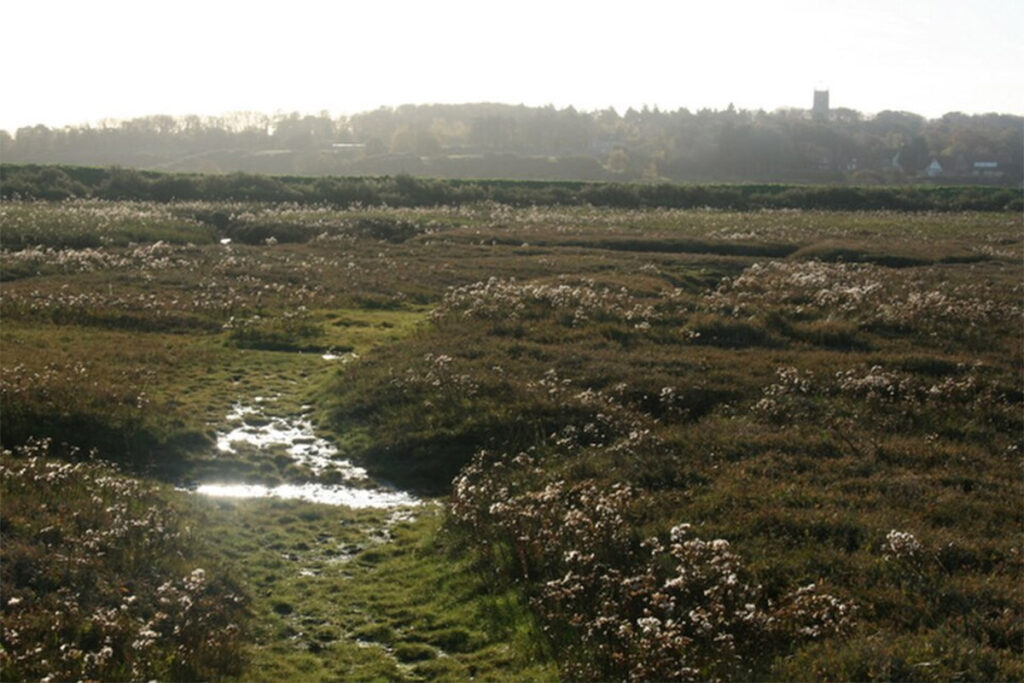
Blakeney Marsh - Photo credit Alan Reid
Blakeney marsh facing Blakeney - photo credit Katy Walters

Plants of the shingle

The shingle ridges are one of the most distinctive plant habitats at Blakeney Point.

Much of the exposed shingle is too mobile and hostile for continuous vegetation. However, where the stones become sufficiently stable, plants can begin to establish.

The earliest vegetation is often sparse, leaving large areas of bare shingle between individual plants. As the surface becomes more stable, vegetation can become increasingly continuous.

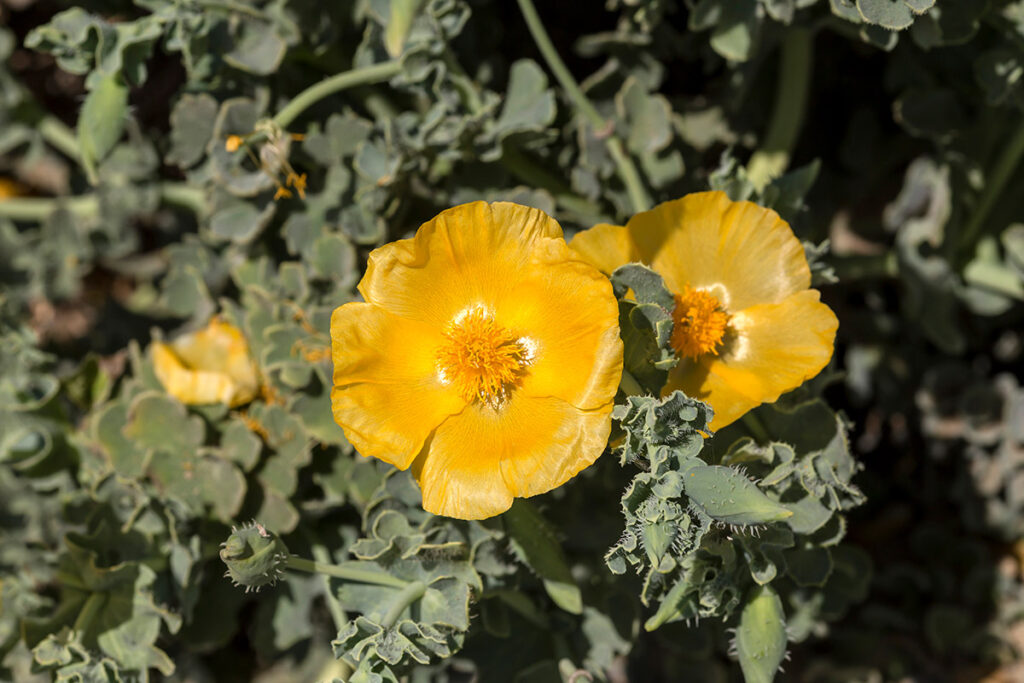
Yellow horned poppy in the vegetated shingle at Blakeney Point

Yellow horned-poppy

Yellow horned-poppy is one of the characteristic plants of large coastal shingle banks.

It produces distinctive yellow flowers and long, horn-shaped seed pods.

It is particularly well adapted to exposed coastal environments and is described by Norfolk Wildlife Trust as a familiar plant of the large shingle banks at Blakeney Point.

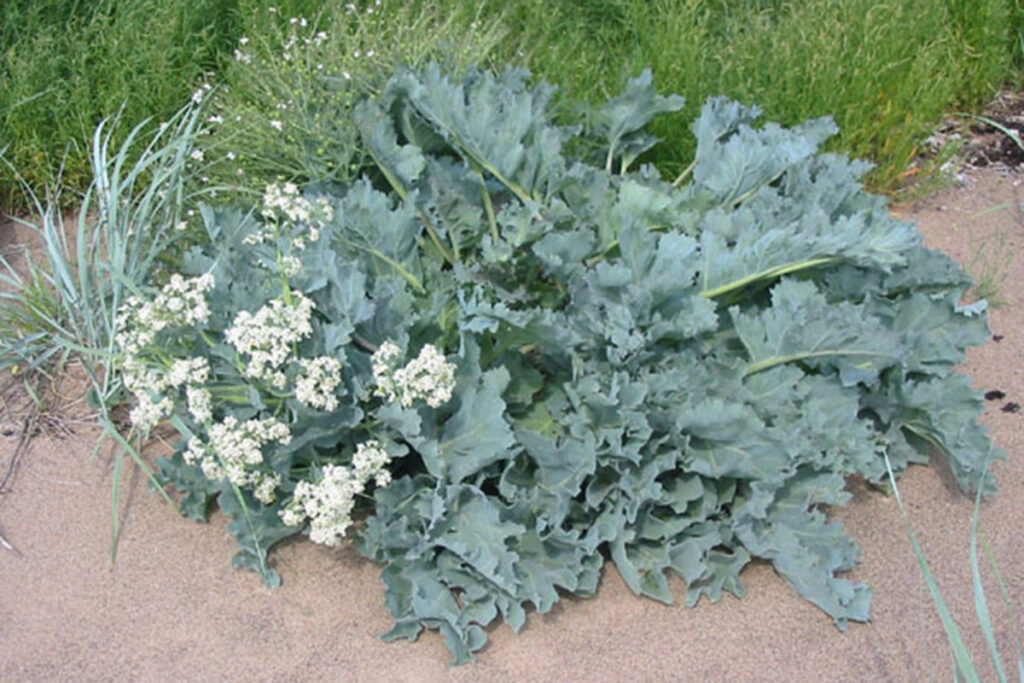
Sea Kale - photo credit Siim at et.wikipedia

Sea kale

Sea kale is another distinctive shingle plant.

Its thick, fleshy leaves help it tolerate the dry conditions found on shingle beaches, while its deep root system helps anchor it in loose material.

It is associated with stable areas above the most active beach zone.

Sea Campion at Blakeney Point - credit Krzysztof Ziarnek, Kenraiz

Sea campion

Sea campion produces white flowers and is well suited to coastal conditions.

It is one of the plants associated with the more established vegetation found on Blakeney’s shingle.

JNCC identifies sea campion alongside thrift as characteristic salt-tolerant plants of more stable vegetated shingle.

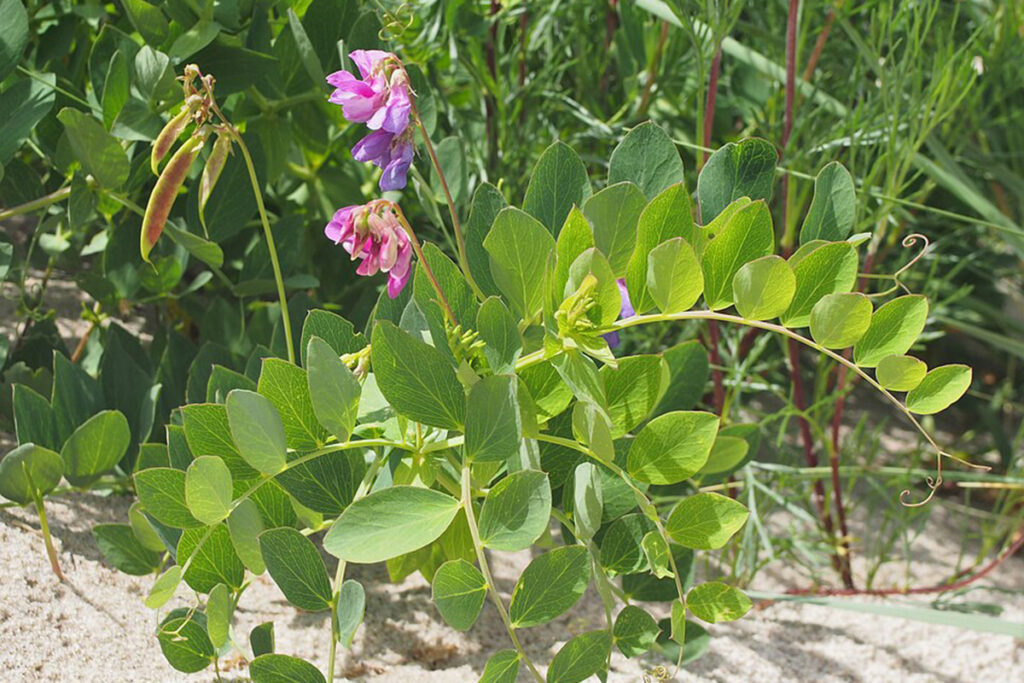
Sea Pea at Blakeney Point - Agnieszka Kwiecień, Nova

Sea pea

Sea pea is a particularly interesting coastal plant associated with shingle and sandy coastal habitats.

Its purple-pink flowers appear during summer and its extensive root system allows it to survive in loose coastal sediments.

Sea pea is one of the plants identified as significant within UK vegetated shingle habitats because of its ability to tolerate periodic movement.

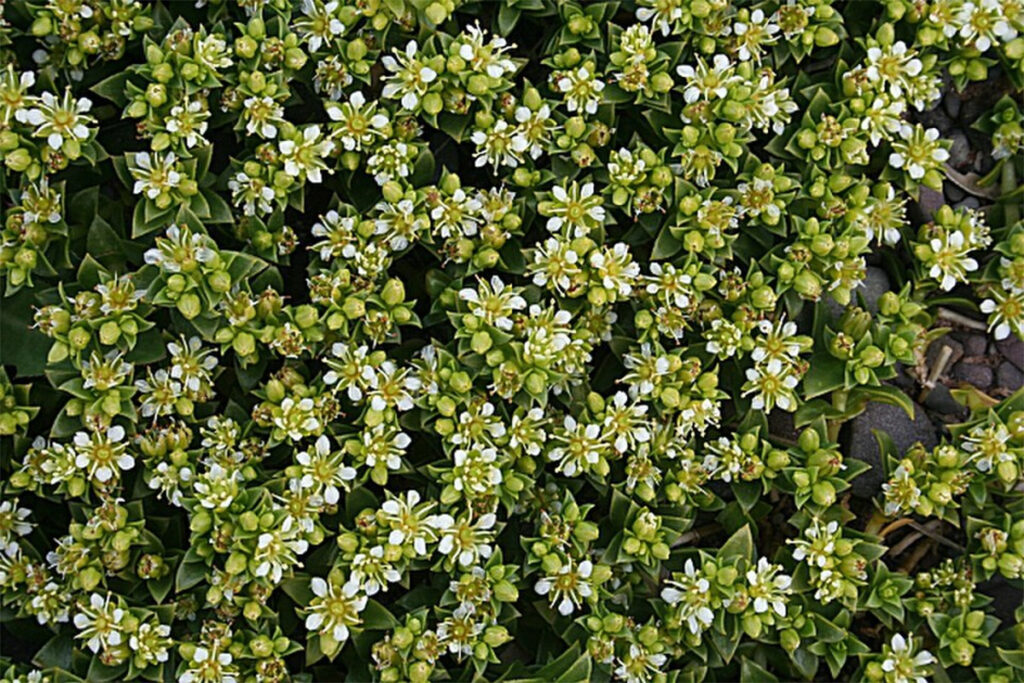
Sea Sandwort - Credit Anne Burgess

Sea sandwort

Sea sandwort is a small, low-growing plant found in coastal habitats.

It is adapted to the exposed conditions of the shoreline and can occur amongst shingle and sand.

Plants of the saltmarsh

Away from the shingle, the plant communities change as the influence of regular tidal flooding becomes more important.

Saltmarsh plants have to tolerate saltwater and waterlogged conditions.

Different species occupy different parts of the marsh depending on their tolerance of flooding and salinity.

Freshly harvested Blakeney Samphire

Samphire

Samphire are among the most characteristic plants of the lower saltmarsh.

They have fleshy, jointed stems and are highly tolerant of salty conditions.

Samphire can colonise newly developing areas of muddy or sandy intertidal ground and is an important pioneer of saltmarsh development. it is also a very delicious food served in restaurants all over the UK.

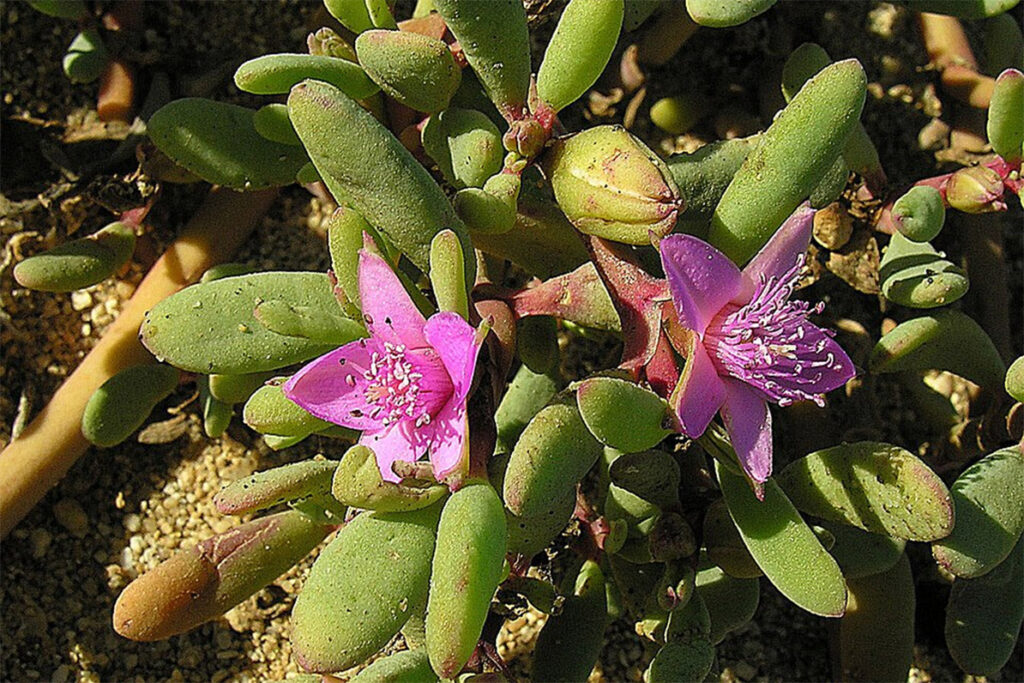
Sea Purslane photo credit - Dick Culbert from Gibsons, B.C., Canada

Sea purslane

Sea purslane is a fleshy-leaved plant associated with higher saltmarsh.

It can form part of the distinctive upper saltmarsh vegetation found along the North Norfolk coast.

Sea aster - credit Le.Loup.Gris

Sea aster

Sea aster produces daisy-like flowers and is another characteristic saltmarsh plant.

Its flowering period brings additional colour to the marsh during the summer.

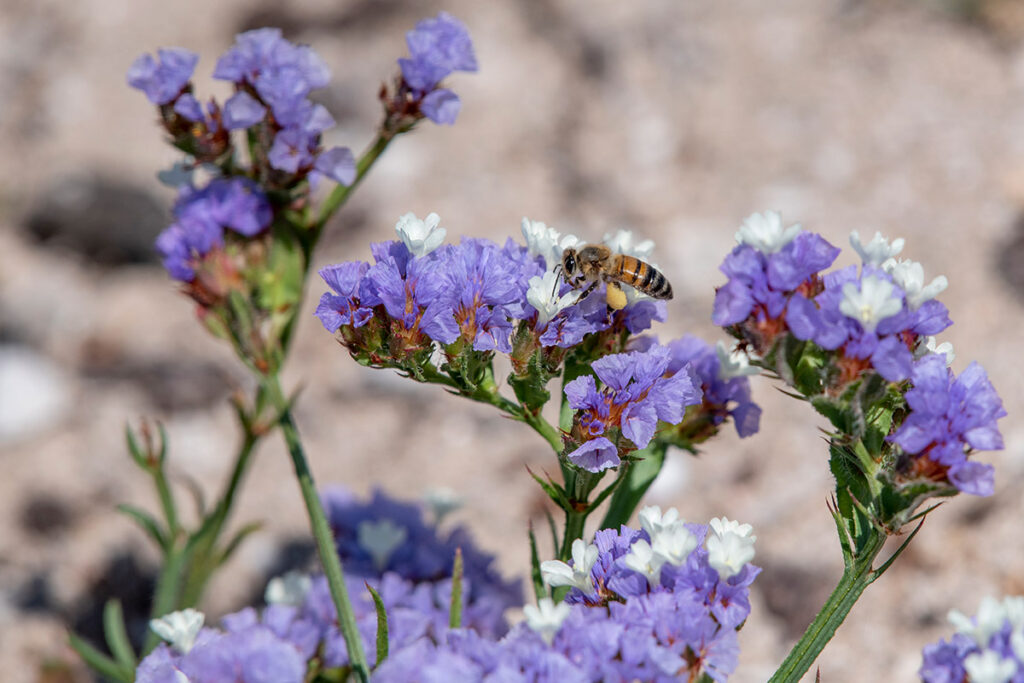
Sea lavender

Sea lavender is one of the more noticeable flowering plants of saltmarsh.

Its clusters of small purple or lilac flowers can provide areas of colour across the marsh during summer.

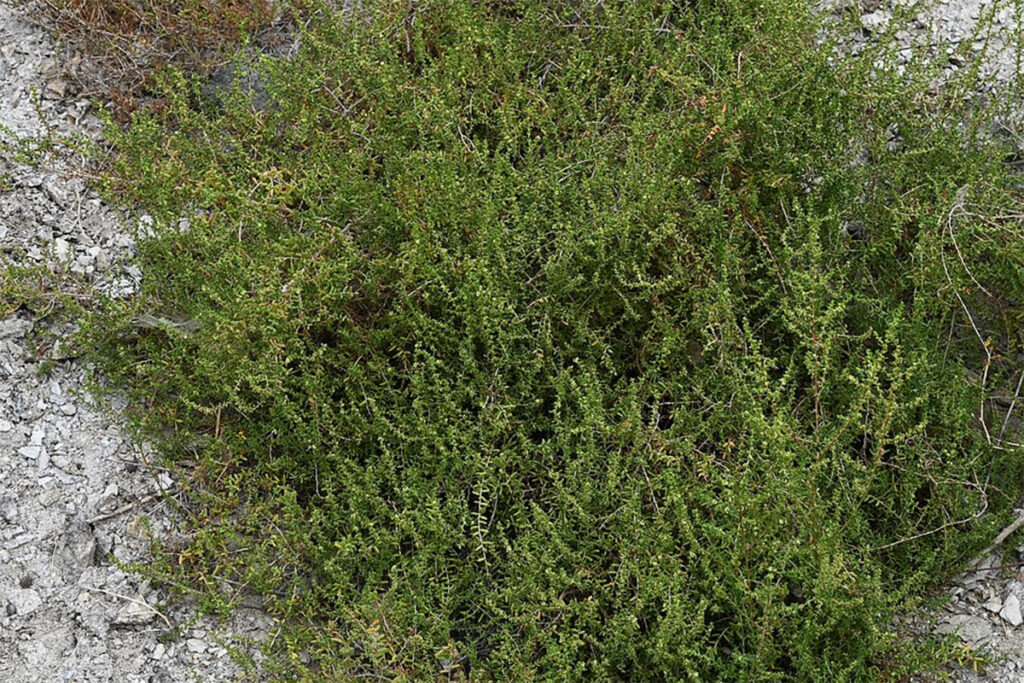
Sea Blite - photo credit Krzysztof Ziarnek, Kenraiz

Shrubby sea-blite

Shrubby sea-blite is particularly significant on the North Norfolk coast.

It is a perennial, fleshy-leaved shrub that can reach around a metre in height and often forms stands towards the upper edge of saltmarsh.

North Norfolk is an important area for this plant, and Norfolk Wildlife Trust records it from the coast between Blakeney and Snettisham.

When to see plants at Blakeney Point

The appearance of the Point changes considerably through the year.

Spring

Plants begin their main period of growth as temperatures increase.

The first flowers start to appear amongst the shingle and coastal grassland.

Summer

This is generally the best time to see flowering coastal plants.

Sea campion, sea pea, yellow horned-poppy, sea-lavender and other coastal flowers can add colour to the Point.

The saltmarsh is also at its most actively vegetated.

Autumn

Later-flowering saltmarsh plants can still be seen, while many plants begin producing seeds.

Shrubby sea-blite can flower into the autumn, with Norfolk Wildlife Trust giving July to October as its flowering period.

Winter

Many plants become less obvious as growth dies back.

Storms and high tides can also reshape the shingle and strandline, creating new opportunities for pioneer plants in the following growing season.

Exploring the Plants of Blakeney Point

A boat trip around Blakeney Point provides a different perspective on the plant communities of the coast.

From the water, you can see how the vegetation changes across the shingle ridges, saltmarsh and dunes, as well as how these habitats fit together.

Depending on the season and conditions, you may also see flowering plants, coastal grasses and the distinctive vegetation of the saltmarsh.

BOOK NOW